Israelis, including Netanyahu, celebrate the anniversary of the bombing of the King David Hotel that claimed 92 lives: http://www.timesonline.co.uk/newspaper/0,,173-2277717,00.html.
Act of resistance or terrorism? Be careful, this is a trick question.
(with thanks to my friend MK)
Thursday, July 20, 2006


Senator Hillary Olmert Responds
This is the canned response I got from Hillary Clinton's office in response to the letter I sent (see previous post). My jaw dropped when I read it. You would think it was written by the office of the Israeli PM not a US senator who represents me. The safety and well being of Lebanese civilians does not seem to even register a blip on the Honorable Senator's conscious.
----------######------------
Dear Dr. ------:
Thank you for sharing with me your concerns regarding the current situation between Israel and Lebanon . The unprovoked attacks on innocent Israelis and the killing and abduction of Israeli soldiers by the terrorist groups Hamas and Hezbollah are dramatic escalations of violence against Israel . The United States must stand by Israel as she defends herself. No government can stand idly by when its citizens and soldiers are attacked and abducted and when terrorist groups make incursions into its territory. Recent events demonstrate that Hamas's ascent to power in the Palestinian Authority, and Hezbollah's participation in the Lebanese government, are dangerous for the stability, not only of Israel , but of the entire region. Hamas and Hezbollah must return the Israeli soldiers they abducted and cease their attacks against Israel .
Israel 's right to exist, and exist in safety, must never be put in question. We must also continue to send a very clear message to Syria , Iran and others to join in condemning these attacks and to exercise their influence over Hamas and Hezbollah.
Again, thank you for taking the time to write. Please be assured that I continue to monitor very carefully this profoundly serious situation. For updates on this and other important issues being discussed before the United States Senate, please check my web site at http://clinton.senate.gov/.
Sincerely,
Senator Hillary Rodham Clinton
-----------######------------
My response:
Dear Senator Clinton,
With all due respect, your canned response to my initial email fell very short of my expectations. As an Arab-American and one of your constituents, I am shocked by the unabashedly pro-Israeli tone of your response that did not even attempt an even-handed approach to this international crisis. Your stance is more hawkish than that of republican neocons whose stubborn self-righteousness is the cause of America's foreign policy fiascos.
Senator, I am not asking you to give up you support of Israel. I am simply asking you to help stop the killing. It is clear though that the lives of innocent Lebanese and Palestinians do not concern you. I conclude from this that you will not even consider the grievances of your Arab-American constituents. Because of that, you have lost my confidence and my vote.
Sincerely.
(TO BE CONTINUED)
Wednesday, July 19, 2006
Dear Hillary, About Lebanon...
Sitting thousands of miles away, angry, hopeless and feeling useless, I can either internalize everything and get an ulcer or try externalize it. So I will talk to whoever listens and write to influence and educate. I have signed petitions, been interviewed by the local newspaper and I continue to post on my blog. Does it make a difference? I don't know but it is the only thing I can do. Changing minds one person at a time is a long term project but so is the Middle East. This is especially true here, this most powerful nation whose behavior determines the destiny of many lesser nations, but whose citizenry is stunningly clueless on matters of foreign policy. Below is my letter to Senator Clinton, an attempt at directly influencing a politician of some standing. I will share her response, if and when I get one.
The Honorable Hillary Rodham Clinton
United States Senate
476 Russell Senate Office Building
Washington, D.C. 20510-3203
Senator Clinton,
I am writing to plead with you to do your utmost to work for an immediate ceasefire between Israel and Hezbollah. This is of utmost urgency to not only spare the lives of civilians, Lebanese and Israeli, but also to spare Lebanon from further destruction.
The United States is the only country that has the clout to ask Israel to stop its cruel and wanton destruction of Lebanon. There is no military, moral or practical justification for Israel's disproportionate actions. The targets have included: civilians (>95% of casualties) , housing, power plants, hospitals, bridges, a civilian airport (in a country without an air force), seaports (in a country without a navy) as well as factories producing milk products and pharmaceuticals. The destruction, even if it were to stop now, will cripple the Lebanese economy for years to come. Any reasonable person would conclude that Israel's aim is not the destruction of Hezbollah but the destruction of Lebanon as a viable country.
I do not condone Hezbollah's action that triggered this conflict, but it is also a myth perpetrated by Israel that Hezbollah represents an existential threat to the state of Israel.
You know very well that this is a war that the Lebanese did not ask for and did not want. Lebanon had been slowly healing for the past 16 years and was emerging as the vibrant, cosmopolitan and diverse place that it once was. The present Lebanese government had until now had the full support of the United States government. It was actively trying to resolve all outstanding national problems through dialogue including the issue of Hizbollah's militia. With the present crisis, the administration has essentially abandoned Lebanon giving Israel the unconditional green light to do whatever it wants. Adding insult to injury, the president has made it clear that he does not wish to intervene until Israel has had enough time to reach its goals.
It has been truly heart wrenching for anyone who knows and loves Lebanon to watch what is going on. Sixteen years of painstaking reconstruction undone in a week of vengeful attacks that serve no one.
Madam Senator, I know that since becoming a senator for the State of New York, you have become a staunch supporter of Israel. But I also remember your courageous position, prior to becoming senator, advocating for an independent Palestinian state.
I am asking you to take an equally courageous stand in support of immediate cessation of hostilities. It is not only the morally right thing to do but also the politically right thing to do. Please do not allow the administration's reckless foreign policies to further damage the United States' reputation. More immediately, Lebanon, a vital country in the Middle East needs to be rescued from complete destruction now.
Monday, July 17, 2006
Robert Fisk's Eyewitness Report
Read it and weep. Of course Israeli actions do not qualify as "shit" in Bush's highly refined diplomatic vocabulary but Hezbullah's actions do.
What I am watching in Lebanon each day is an outrage
By Robert Fisk in Mdeirej, Central Lebanon 07/15/06 " The Independent" -- - -
The beautiful viaduct that soars over the mountainside here has become a "terrorist" target. The Israelis attacked the international highway from Beirut to Damascus just after dawn yesterday and dropped a bomb clean through the central span of the Italian-built bridge a symbol of Lebanon's co-operation with the European Union sending concrete crashing hundreds of feet down into the valley beneath. It was the pride of the murdered ex-prime minister Rafik Hariri, the face of a new, emergent Lebanon. And now it is a "terrorist" target. So I drove gingerly along the old mountain road towards the Bekaa yesterday - the Israeli jets were hissing through the sky above me - turned the corner once I rejoined the highway, and found a 50ft crater with an old woman climbing wearily down the side on her hands and knees, trying to reach her home in the valley that glimmered to the east. This too had become a "terrorist" target. It is now the same all over Lebanon. In the southern suburbs - where the Hizbollah, captors of the two missing Israeli soldiers, have their headquarters - a massive bomb had blasted off the sides of apartment blocks next to a church, splintering windows and crashing balconies down to parked cars. This too had become a "terrorist target. One man was brought out shrieking with pain, covered in blood. Another "terrorist" target. All the way to the airport were broken bridges, holed roads. All these were "terrorist" targets. At theairport, tongues of fire blossomed into the sky from aircraft fuel storage tanks, darkening west Beirut. These too were now "terrorist" targets. At Jiyeh, the Israelis attacked the power station. This too was a "terrorist" target. Yet when I drove to the actual headquarters of Hizbollah, a tall building in Haret Hreik, it was totally undamaged. Only last night did the Israelis manage to hit it. So can the Lebanese be forgiven - can anyone here be forgiven - for believing that the Israelis have a greater interest in destroying Lebanon than they do in their two soldiers? No wonder Middle East Airlines, the national Lebanese airline, put crews into its four stranded Airbuses at Beirut airport early yesterday and sneaked them out of the country for Amman before the Israelis realised they were under power and leaving. European politicians have talked about Israel's "disproportionate" response to Wednesday's capture of its soldiers. They are wrong. What I am now watching in Lebanon is an outrage. How can there be any excuse for the 73 dead Lebanese blown these past three days? The same applies, of course, to the four Israeli civilians killed by Hizbollah rockets. But - please note the exchange rate of Israeli civilian lives to Lebanese civilian lives now stands at 1 to more than 15. This does not include the two children who were atomised in their home in Dweir on Thursday and whose bodies cannot be found. Their six brothers and sisters were buried yesterday, along with their mother and father. Another "terrorist" target. So was a neighbouring family with five children who were also buried yesterday. Another "terrorist" target. Terrorist, terrorist, terrorist. There is something perverse about all this, the slaughter and massive destruction and the self-righteous, constant, cancerous use of the word "terrorist". No, let us not forget that the Hizbollah broke international law, crossed the Israeli border, killed three Israeli soldiers, captured two others and dragged them back through the border fence. It was an act of calculated ruthlessness that should never allow Hizbollah leader, Hassan Nasrallah, to grin so broadly ay his press conference. It has brought unparalleled tragedy to countless innocents in Lebanon. And of course, it has led Hizbollah to fire at least 170 Katyusha rockets into Israel. But what would happen if the powerless Lebanese government had actually unleashed air attacks across Israel the last time Israel's troops crossed into Lebanon? What if the Lebanese air force then killed 73 Israeli civilians in bombing raids in Ashkelon, Tel Aviv and Israeli West Jerusalem? What if a Lebanese fighter aircraft bombed Ben Gurion airport? What if a Lebanese plane destroyed 26 road bridges across Israel? Would it not be called "terrorism"? I rather think it would. But if Israel was the victim, it would also probably be Word War Three. Of course, Lebanon cannot attack Tel Aviv. Its air force comprises three ancient Hawker Hunters and an equally ancient fleet of Vietnam-era Huey helicopters. Syria, however, has missiles that can reach Tel Aviv. So Syria - which Israel rightly believes to be behind Wednesday's Hizbollah attack is not going to be bombed. It is Lebanon which must be punished. The Israeli leadership intends to "break" the Hizbollah and destroy its "terrorist cancer". Really? Do the Israelis really believe they can "break" one of the toughest guerrilla armies in the world? And how? There are real issues here. Under UN Security Council Resolution 1559 - the same resolution that got the Syrian army out of Lebanon - the Shia Muslim Hizbollah should have been disarmed. They were not because, if the Lebanese Prime Minister, Fouad Siniora, had tried to do so, the Lebanese army would have had to fight them and the army would almost certainly broken apart because most Lebanese soldiers are Shia Muslims. We could see the restarting of the civil war in Lebanon - a fact which Nasrallah is cynically aware of - but attempts by Siniora and his cabinet colleagues to find a new role for Hizbollah, which has a minister in the government (he is Minister of Labour) foundered. And the greatest now is that the Lebanese government will collapse and be replaced by a pro-Syrian government which could re-invite the Syrians back into the country. So there's a real conundrum to be solved. But it's not going to succeed with the mass bombing of the country by Israel. Not the obsession with terrorists, terrorists, terrorists.
(c) 2006 Independent News and Media Limited
Saturday, July 15, 2006
Enough Delusions!
For the past two days I have had a gnawing feeling in the pit of my stomach. It is a mix of disgust, anger and hopelessness at the events in Lebanon, a country that I love. My memories of living through many similar events in Lebanon remain vivid so I know what it feels, sounds and smells like... I hate it and I don't wish it on my worst enemy. As I have watched the Lebanese slowly rebuild their shattered country over the last 16 years, I had hoped against all odds, that the youngest generation of Lebanese would be finally spared the horrors of war.
I seethe in anger at the callousness and cruelty with which Israel destroys innocent lives and Lebanon's civilian infrastructure in the name of self-defense with the silent acquiescence of the rest of the world. The Israelis know perfectly well that Lebanon is deeply divided over Hizbullah's militia. Why punish everyone? The only conclusion one can draw from their over reaction is that they are not interested in a stable and prosperous Lebanon but in one that is in perpetual political and economic chaos. From their response in Gaza, they have the same condescending attitude to the Palestinians. To all this, the moronic US president, with his cartoonish, black and white view of the world gives his full, unconditional support. Just imagine the brownie points he would have gained with the "Arab Street" that he is trying so hard to woo, if he would have at least qualified his support of Israel by saying: "OK to self defense ... But civilians and civilian infrastructure are not fair game". Is it not these same civilians, whether in Gaza or Lebanon, to whom he wants to bring democracy? No wonder that the "Arab Street" is cynical of American intentions.
Equal to my anger and disgust at the Israelis is my anger and disgust at Hizbullah and its leaders for the sheer recklessness and stupidity of the act that triggered this whole fiasco. What were they really trying to achieve? Yes, yes, I know, the reason for the continued existence of their militia is they want to liberate every last inch of Lebanese territory because that speck on the map that is Shebaa farms is so critical for Lebanon's future. Even if it is so, is this the right time? The right way? Is it in the end worth it? Is it even logical to go up against one of the most powerful armies in the world backed up, unconditionally, by the only superpower. Rigid ideology has to be tempered by logic and reason if not it becomes delusional and self-destructive.
Some may think my explanations naive as this is surely part of a larger, Machiavellian game played at the regional level. I will let others speculate. What I do know is that these games always serve the narrow interests of the leaders -survival at any cost- who engage in them and comes invariably at the expenses of the people they are sworn to serve.
To their credit, Hizbullah did, as they are like to remind the Lebanese, force Israel to leave in 2000. For that, they were rewarded with real political power to represent their constituency, the Shia, that has long been marginalized in Lebanon. Why then did they not then disband their militia? Is it such a hard concept to understand that a stable independent state cannot function with two armies one answering to the government and one to a leader with no political or legal authority? They are either unable or unwilling to transform from a resistance movement that is capable of blowing things up to a political movement that can help build a country. They justify the continued existence of their militia to the general public by invoking the need to liberate the Shebaa farms but are in reality unwilling to give up the power that comes with having their own private army. Just imagine the intoxicating power that Nasrallah must be feeling acting as if he was simultaneously president, prime minister and commander in chief of Lebanon but without any of the constraints or responsibilities. So he can callously offer up all his citizens and his country for "all out war" because in the end he will not have to fix the bridges or mend the lives that are affected as a consequence of his action.
Tuesday, July 04, 2006
Steel & Silk: The Good, the Bad and the Ugly
 Sami Moubayed's 623 page opus is subtitled: Men and women who shaped Syria 1900-2000. This book contains short biographies of 341 Syrians whom Moubayed feels have had the largest impact -good or bad- on the history of the nation. He profiles personalities from all facets of public life including politicians, military officers, administrators, educators, and literary figures.
Despite the encyclopedic nature of this undertaking, the book is an easy and interesting read. Moubayed's writing style is clean and his biographies are peppered with interesting anecdotes or quotes that bring to life the personalities of the individuals. In his introduction, Moubayed makes the point that he has tried to be as objective as possible without leaving out inconvenient details that may expose a person's "flaws, foibles, failures and follies". He has largely achieved this objective with one exception. The politicians who have dominated Syria since 1970 seem strangely free of "flaws, failures, foibles and follies". In addition, his historical timeline contains some jarring entries. Consider this one: "1982. February. The Syrian Army went to war in Hama against the Muslim Brotherhood, who were calling for a holy war against the Baathists. The military uprising against the regime was crushed by force, and the armed forces pledged unwavering loyalty to Hafez al-Asad". Was that last part necessary or even factual for that matter? It has the fishy smell of propaganda. And how about the thousands, tens of thousands of civilians who perished? Whether this represents Moubayed's conscious sanitizing of recent Syrian history or just a case of self-preserving, self-censorship, only he can say.
Despite these shortcomings, this is an excellent reference book for anyone interested in Syrian history.
Saturday, June 24, 2006
Andalusian Lessons
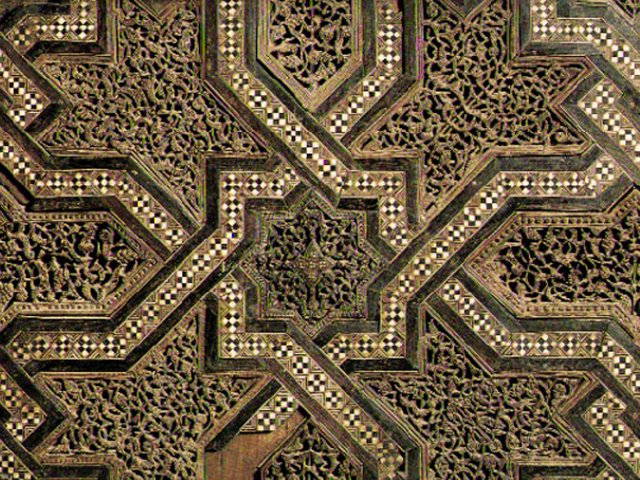

During these times of a much hyped clash of civilizations, it is perhaps instructive to look back at another such encounter. For several centuries, medieval Spain was the fault line that bore the brunt of the colliding tectonic plates of the Muslim East and Western Christianity. Yet this border zone of competing empires, under largely Muslim rule for over seven centuries, managed to flourish and develop to unparalleled heights of culture and scientific advancement.
My interest in al-Andalus was ignited after reading Leon L'Africain (Leo Africanus in the English translation), a carefully researched epic historical novel by the inimitable Amin Maalouf. It is the story of Hassan al Wazzan , a Granadan by birth who flees Spain to Fes with his family in the waning years of Moorish presence. Later, as a diplomat and explorer, he is captured and brought to Rome, baptized and becomes an adviser to the Pope. Most helpful however, has been the very readable historical narrative by Maria Rosa Menocal: Ornament of the World (see previous post) which provides an excellent description of the inner workings of Moorish Spain. The book provides a clear-eyed and objective analysis of what made al-Andalus work, warts and all. A friend thought that the book gave too much credit to non-Muslims for the achievements of al-Andalus. But that is exactly the point, is it not? The genius of the Muslim rulers of al-Andalus is that, in their tolerance and their love of knowledge, they allowed the different religious communities to thrive and contribute to the Andalusian culture and civilization.
To many Arabs and Muslims, mired in political and cultural stagnation, al-Andalus evokes deep sentiments of nostalgia for a mythologized world. To some, it also represents hope for the future. If our culture and religion were capable of helping create al-Andalus, the thinking goes, then we should be able to pull ourselves out of our quagmire. What redeeming values represented by the history of al-Andalus are best suited for this rescue operation depends on where on the Arab political spectrum you fall.
When fanatical fundamentalists speak of al-Andalus, it is to boast of conquest and empire. The irony is that, had the early Andalusian rulers been of that same mindset, al-Andalus would never have become an "ornament of the world". In fact during the centuries of Muslim rule, fanatic hordes would occasionally invade from North Africa, undoing what the more enlightened rulers had achieved. The end of Moorish Spain also came at the hands of fanatical hordes, this time Christians from the North bringing with them the horrors of the Inquisition.
The lessons learned from al-Andalus are that civilizational clashes need not be destructive provided that some modicum of mutual respect exists and that each side is secure enough to learn from the other. It is perhaps not by accident that the first rulers of al-Andalus were Umayyads from Damascus, a cosmopolitan city with its multiplicity of ethnic and religious groups. Who better than a Damascene to communicate with and engage the Christian and Jewish communities of the Iberian peninsula.
- Note: Another book of interest on the same topic: Shadows of the Pomegranate Tree. Another carefully researched work of historical fiction by Tariq Ali, a British, secular, leftist writer of South Asian descent. It is the saga of an Andalusian family in the last years of Moorish Spain. Also of interest from the same author: A Sultan in Palermo, a novel about another civilizational fault line. It is the story of the cartographer al-Idrissi in 12th century in the waning years of Arab Sicily during the Norman conquest.
Friday, June 16, 2006
Syrian Prisoners of Conscience Languish in Jail

My friend Fares reminded me that we need to keep the issue of the plight of Syrian political prisoners in the public eye. It is easy to become complacent and resign oneself to the fact it all seems hopeless. That is exactly what the regime wants and expects of the Syrian people and as long that is the response they get, nothing will ever change. We owe it to these prisoners of conscience and we owe it to the future of our country to keep pushing for their release. Not even a dictatorship is totally immune to the weight of public opinion. So here are some of the latest updates:
- Bashar justifies the latest round of arrests and imprisonment by saying that the timing of the Damascus-Beirut declaration was inopportune for his purposes.
- Burhan Ghalioun argues that the arrests reflects the weakness of the regime and will backfire on them. They will not get away with portraying the likes of Anwar el Bunni and Michel Kilo as equivalent to the violent militants of the 1980s. The Syrian people may be subdued but they are not stupid.
- Arbitrary arrests continue. It seems like every minor (perceived) transgression is treated like high treason.
- Fateh Jamous, an imprisoned political activist is subjected to beatings and denial of his basic rights as a political prisoner.
- Lest we forget: Here are a few of Syria's prisoners of conscience: Mahmoud Issa, Michel Kilo, Khalil Hussein, Anwar el Bunni, Ali Abdallah, Mohammed Ali Abdallah, Suleiman Shimri, Nidal Darwish, Safwan Taifu, Mahmoud Merhi, Ghaleb Amer, Kamal Labwani and Mohammed Mahfoud.
- Not in the limelight but equally important are the young student activists who have been subjected to arbitrary arrests and imprisonment and who should not be forgotten: Ali al Lawali, Ali al Ali, Hussam Melhem, Tarek al Ghorani, Maher Asbar, Alem Fakhour, Abham Safr, Omar al Abdallah and Diab Serieh.
(Photo: A.K.)
Tuesday, June 06, 2006
The NSF Threw a Party and Nobody Came
What was most telling about the recent National Salvation Front meeting in London was not so much who was present and what was said, but who was absent.
What was said was nothing that hadn't been articulated in previous meetings. When asked how they plan to achieve the Front's laudable goals, things get a little murky. Yes they want to change the incorrigible regime but they want to do it without the interference of foreign governments and without resorting to violence and hint vaguely of allies within Syria ready to effect the changeover. Has the NSF found some magic formula that has eluded everyone else? If they can pull this off, I will -maybe- forgive Khaddam, the neo-democrat, his past sins.
What was absent from the meeting was substantial media coverage. Syria is, after all, in the cross hairs of the United States, a bona fide member of the Axis of evil and here is a group plotting to overthrow the offending regime. You would think every major and minor media outlet would be there to cover this momentous event. Did the NSF bungle this opportunity to turn the heat on Bashar and forget to invite the media? Or has the international media lost interest? Unfortunately, I think it is the latter. A quick Google search showed few entries related to the meeting. With Iraq burning next door and with no -as of yet- viable opposition to Bashar, Syria has fallen to the bottom of the West's to do list.
Meanwhile, the Assad dynasty having escaped yet another close call continues to celebrate by throwing more of its citizens in jail. This time it is courageous individuals from Suwayda who dared sign a petition condemning the recent arrests of activists who signed the Beirut-Damascus declaration.
I sure hope Brammertz has a couple of tricks up his sleeve.
Monday, May 22, 2006
Effecting Change from Afar: Reality or Illusion?
Several weeks ago I saw an announcement on a Canadian-Syrian news website for the First Annual Meeting of the Syrian American Congress (SAC) to be held in Chicago on May 20th. SAC is a recently formed organization whose mission statement outlines three goals:
- Promote friendly relations between the peoples of the USA and Syria
- Advance human rights, civil liberties, and democracy in Syria
- Encourage international cooperation, based on international law and justice
These were laudable goals, I thought, and the program looked interesting, so I decided to attend.
There were between 75-100 attendees. The organizers stated that the goal was to find ways in which Syrian-Americans can help promote reform in Syria but hoped to do achieve that in a non-confrontational way. The invited speakers were to include a spectrum of viewpoints but was most notable by those who were absent. Neither ambassador Imad Moustapha nor Bouthaina Shaaban made (scheduling conflict was the given reason; yeah, right!). Opposition member Riad Seif, with his passport confiscated could not attend and fearing his safety, understandably declined to address the meeting by phone. For similar reason neither could Jad al-Kareem al-Jibai, a human rights activists though he addressed the conference by phone from Damascus speaking fearlessly about the situation in Syria. There was a lively point counterpoint between Najib Ghadban, a fierce critic of the Syrian government and Muhammad Habash, an ostensibly independent member of parliament. The latter's glass half-full view of the Syrian regime led him to make inane justifications for the regime's behavior. Both Habash and David Lesch, author of The New Lion of Damascus, in response to a pointed question, seem to be smitten with Bashar (is he such a charmer? or is it Asma?). Lesch's presentation still left me wondering about the real Bashar. Perhaps I am making too much of Bashar the "enigma". I should take him at face value. After all, to be enigmatic implies a certain cleverness not evident in Bashar's disastrous serial political blunders. The most compelling presentation was that of Radwan Ziadah, director of the Damascus Center for Human Rights. A small and unassuming man, Radwan gave a very perceptive analysis of the state of human rights in Syria. Having recently signed the Beirut-Damascus declaration, he came to this meeting at great risk to himself.
So, what can Syrians, living so far actually do? SAC does not want to be viewed as part of the political opposition but nevertheless wants to promote change and reform. So, by necessity, it is limiting its work to only "non-controversial" issues such as economic and institutional reform, things that even a Baathist can comfortably pay lip service to. This greatly diminishes the second stated goal of its mission statement (promotion of human rights and democracy). SAC also needs a partner within Syria to assist in promoting change. NGOs would have been the appropriate partners but the regime has made it difficult for many NGOs to function properly. So who is left to partner with? Perhaps selected, reform minded, non-Baathist technocrats and independent members of parliament. Are there enough such people to work with? I am not certain.
Despite all these difficulties, perhaps SAC's Achilles heel is the fact that no matter how careful it is in its message, it will always perceived as foreign and therefore in the paranoid mindset of the regime, suspicious. It is after all the Syrian AMERICAN Congress. The absence of Moustapha and Shaaban from the proceedings is an early indication of the regime's disinterest.
Whether political change happens slowly and painfully or rapidly (and painfully), Syria is in need of reform in all aspects of its public life. I therefore fully support the intentions of the SAC although I am skeptical that, in the current climate, anyone can, from the outside, assist in reforming the system from within.
One thing I am certain about after this meeting, though, is that there are righteous people working within such as Jad al-Jibai and Radwan Ziadah whose tenacity and courage astound me. These are the true Lions of Damascus and they deserve our full support.
Thursday, May 18, 2006
Free Michel & Anwar & Nidal & Mahmoud & ...
The swift "Free Alaa" campaign mounted by fellow bloggers was admirable and seems to have garnered much media attention. Whether this campaign will lead to his release remains to be seen but such attention is important as it makes even jaded authoritarian governments uncomfortable. I would like to see such attention directed towards the ongoing campaign of intimidation and arrests the Syrian government is mounting against democratic reformists and human rights activists. Making noise about these arrests serves two purposes. One is to increase international pressure on the Syrian government. The other, perhaps more important, is to show the cowed people of Syria that this is not "business as usual", that the regime's modus operandi is no longer acceptable to the world and should not be acceptable to the people of Syria.
The "crime" of those recently arrested is to have signed the recent Beirut-Damascus declaration penned by intellectuals from both countries. This is not a revolutionary memorandum authored by trigger happy radicals itching for a fight. It is for the most part a mild-mannered, balanced and reasoned declaration replete with politically correct pan-Arabist lingo. Yet the Baathist regime in its downward spiral back into the suffocating repression of the 1980s has found this declaration intolerable.
I had promised in a previous post to do my best to publicize the names of all those wrongfully detained by the regime. Many people know about Kilo and al-Bunni, the others are less known but equally important in my mind and I admire them for their courage and perseverance. The following are the regime's latest victims:
- Michel Kilo: Journalist, political and human rights activist
- Anwar al-Bunni: Lawyer and human rights activist
- Mohammed Mahfouz
- Nidal Darwish: Human rights lawyer
- Mahmood Issa: Communist activist
- Safwan Tayfour: Activist
- Khalil Hussein: Kurdish Future Current
- Khaled Khalifeh
- Suleiman al-Shammar: political activist
- Kamal Sheikho: human rights activist
- Mahmoud Mer'i: Secretary to the Arab organization of Human Rights
Friday, May 12, 2006
A Thousand Words...


A picture is worth a thousand words it is said and these three still pictures of the recent demonstrations in Egypt say plenty. They are emblematic of all that is broken in our part of the world: The insolence and brutality of those in power, the absence of freedom of speech, the absence of freedom of assembly and the absence of the rule of law.
Above all, the photographs show the utter contempt with which rulers deal with their citizenry. To the rulers, citizens are pawns, not breathing, living individuals but a protoplasmic mass that can be trimmed, cut, disposed off and sacrificed at the convenience of the rulers. Apologists for these regimes claim that we Middle Easterners are like unruly children in need of paternalistic authoritarian regimes. Trouble is, implicit in a paternalistic relationship is the presence of a certain affinity between the ruler father figure and the ruled. No such affinity exists. This is more akin to an abusive family relationship where the child is slapped even before they open their mouth.
As offensive as these images are, they represent the tip of the iceberg. If this is what the regime, without a hint of shame or embarrassment, is willing to do to its people in public, just imagine what happens when the cameras are not present. I am not singling out Egypt; at least in Cairo, there were enough journalists to actually capture the images. No such demonstration would be allowed to even start in Syria, except of course, if the intention is to burn down a foreign embassy.
These images not only offend me but they also anger me and trigger a schizophrenic personality shift in me from a cautious believer in gradual change from within to one who wants to see someone, ANYONE, come in guns blazing to get the bums out. But then I see Iraq.
Sunday, April 30, 2006
Voices from the Past: Syrian Women and the Vote



I found the following document a couple years ago. It is part of the proceedings of the Syrian Arab Congress of 1920. You may recall this is the time when delegates to the congress declared independence and were trying to establish a constitution before France said it was having none of that. During these proceedings delegates discuss whether or not to grant women the right to vote. The give and take among the delegates is intriguing. It is also sobering to see that some of the delegates, in 1920!!, had more progressive ideas than some of our modern day compatriots.
This document is of personal interest to me as it contains words uttered by my grandfather whom I had never met as he died many years before I was born.
(Photo: A.K.; Fossilized dinosaur footprint, Texas)
Friday, April 21, 2006
Reform the Syrian Way
Ali Abdallah, a Syrian journalist and democratic activist was rearrested along with his sons and his whereabouts remain unknown (see Amarji). His plight was also recently reported by Reporters Without Borders.
Mohammed Ghanem, a Syrian novelist and political activist who runs the website: www.surion.org was also recently arrested. Details of his arrest was also reported by Reporters Without Borders and other human rights organizations.
Arbitrary arrests of activists and opposition members continue as the Syrian regime continues to move backwards seemingly emboldened by the perception that international pressure has eased. Let's see if that false sense of security persists after Brammertz pays a visit to Bashar.
Regardless of the results of the international political brinkmanship, as a Syrian blogger seeking change, it is my duty to publicize the plight of these individuals so that news of their arrests is as widely disseminated as possible. I hope to continue doing that.
The Syrian regime should be held accountable. Any talk of reform without the basic right of free expression is meaningless.
Sunday, April 09, 2006
Birth of the Syrian American Congress
The political turmoil in Syria over the past year has mobilized the Syrian expatriate community to form the Syrian American Congress in September 2005. This is a welcome development and although clearly instigated by well-meaning people who would like to see positive, peaceful change happen in Syria, its mission statement is mealy-mouthed and vague. The second clause of its mission statement declares that the Congress supports "human rights, civil liberties and democracy for all people everywhere". For ALL people EVERYWHERE? It is a noble sentiment but the emphasis of the SYRIAN American Congress, you would think, should be on the Syrian people. I wish the statement was less timid and more forthright (easy for me to say, hiding behind my anonymous blog) .
At any rate the Syrian American Congress is holding it first annual conference in Chicago on May 20th. The title of the conference is "Syrian Americans and Syrian Reforms". Among the featured speakers is the human rights activist Radwan Zyada as well as two of the Regime's chief apologists, Syrian ambassador Imad Mustafa and minister of expatriate affairs Bouthaina Sha'ban. It should be interesting and I will be making every effort to attend.
Monday, April 03, 2006
Requiem to the Cedar Revolution

I remember vividly how thrilled I was at the sight of the massive demonstrations last March in Beirut. At the same time, as a Syrian, I also sensed that the passionate, red hot nationalism manifested during those demonstrations was bound to spill over into xenophobic excess (understandable, perhaps, but still inexcusable). Yet the sight of a million Lebanese, about a quarter of the country's population, spontaneously making their voices heard was unprecedented in Lebanon or anywhere in the Middle East and the prospects of what that meant for the region made me giddy with anticipation. This demonstration of the power of ordinary people, I thought optimistically, not the 150,000 US troops in Iraq will change the face of the region for the better. Lebanon, was perhaps the only place in the region where such a demonstration of people power could have been mounted. The reasons are many: an educated, politically, culturally and religiously diverse citizenry, an essentially free press and recent experience with the ravages of civil strife. In contrast to the monochromatic public discourse in most Arab countries, the Lebanese were routinely exposed to contrarian views that challenged what passed as conventional wisdom in most of the region. Add thirty years of occupation and the Lebanese people were primed. But, in hindsight, the most important factor in this rare demonstration of Lebanese unity, and perhaps the reason it was unsustainable, was that the perceived enemy was foreign.
Some skeptics may dispute the fact that these demonstrations were spontaneous. I disagree. The powers that be with their inbred leaderships, their sectarian outlooks, and their cynical political machinations were incapable of imagining such a powerful response to the murder of Hariri. Once they realized the potential power of the movement, they co-opted it (Hijacked, in the words of the Grateful Arab). Following the pullout of the Syrian troops, the unity of people power, was promptly replaced by the old, narrow-minded preoccupations of the established parties. They spoke of the lofty ideals of Lebanes unity in public but practiced their old worn game of sectarian politics behind closed doors. There were no new faces just the same old names of recycled politicians, some -ultimate opportunists- thinking nothing of making an about face in their political persuasions. Many Lebanese continue to blame the Syrians for the present impasse; that argument is wearing thin a year after the pullout of Syrian troops. Syria's proxies (Lahoud and Hezbollah) certainly contributed heavily to the present stalemate but rather than doing Syria's bidding, they were trying to maintain their own power and push their agendas (Although I am not sure Lahoud has an agenda).
The ultimate success of the Cedar revolution will rest on its ability to force Lahoud out before the end of his term. This is vitally important not only for Lebanon but as a precedent setting event for the whole region. The ouster of Lahoud will embolden the Syrian opposition and perhaps shake the cowed people of Syria into action. Unfortunately, a year out, I fear that much the Cedar revolution's momentum has been dissipated.
I hope I am proven wrong.
(Watercolor, Yas., age 7)
Saturday, March 25, 2006
Syrian Opposition: Waiting for...What?


Call me impatient or call me a skeptic but its seems to me that all the internal and external Syrian opposition meetings and declarations are generating a lot of heat and very little light. How exactly is the opposition planning to change the regime?
There seems to be unanimous agreement among the opposition that foreign military intervention is not an option. Besides, the Americans, the only ones capable -and foolish enough- to entertain this possibility, have their hands full next door. No one wants to risk a violent internal change either as it might degenerate into civil strife.
The opposition seems to be confident that a combination of internal and external pressures will eventually topple the regime. Statements have been made over the past year that the regime is only months away from total collapse. That appears to be wishful thinking. By all indications that I can see, the regime appears to be unrepentant and largely unfazed. Instead of opening up the regime appears to be becoming more repressive. Instead of escalating pressure on Bashar and Co., the Americans and Europeans seem to have loosened the noose around his neck. Sure there is the periodic State Department scolding of the regime but nothing like the bluster of the first few months after the Hariri assassination. Bashar has delivered on the issue of border control and the Americans, especially after the Hamas win and the ongoing mess in Iraq, would now rather have stability than democracy. Moreover, in the name of Arab harmony and stability, the Egyptians and Saudis are working to defuse some of the international pressure on the Syrian regime. The expectation was that the results of the Hariri investigation would be the straw that would break the regime's back. However, a year after the crime and with the initial investigation bungled and tainted by the Lebanese authorities, the trail is cold. Neither Mehlis nor Brammertz have produced "smoking gun" evidence of complicity by the leadership of the Syrian regime (to paraphrase: absence of proof is by no means proof of innocence).
What about people power? Unless I missed something major, not much seems to be happening. There are the occasional small, timid anti-government demonstrations that are brutally nipped in the bud. The Syrian people are either too cowed by the regime or afraid of what they see happening in Iraq; or the majority are too politically disengaged to care. If there is a simmering population ready to explode, I don't see any evidence of it. Perhaps it is that most members of the opposition -with the exception of the Kurds- do not have large constituencies that can be readily mobilized into the street.
So coming back to my initial question: how do you change a regime non-violently if the regime will not "go gently into the night"? The answer is a bloodless coup, a palace coup, or to use a medical metaphor, a minimally invasive procedure. To achieve such a coup, you have to have friends on the inside. Enter Khaddam. This is perhaps why despite his unsavory past and unconvincing overnight conversion to the lofty ideals of freedom and democracy, the opposition is flocking to him. The man's got a plan; he talks of preparing to drop a "political bomb" and hints of having highly placed individuals in the Syrian armed forces ready to the bidding on his behalf.
Like many Syrians, I do not trust Khaddam but I really don't see anyone else capable of effecting the change that we are looking for. At the same time I fear what he will do the morning after.
(Photo: AK, Muir Woods, California)
Saturday, March 18, 2006
Fragments of Memory

Here are fragments of memories from my Syria formed in childhood. To me, these are important memories that decades of absence have failed to erase and make irrelevant. Despite living and adapting to other lands, Syria is the only place I feel a primordial connection to. This sense of belonging is perhaps subjective but paradoxically seems to grow with time -and age.
- Getting separated, at age five, from my mother in Souk el Hamidieh and making my way back home while my parents and the police frantically searched for me...
- Breathing the cool, crisp, early morning mountain air of Slenfeh...
- The large sepia-toned portrait of my grandfather, whom I never met, hanging in a thick wooden frame in my grandmother's house...
- Feeding ducks in Jnainat el Sabkeh (does it exist?) in Damascus...
- The familiar comforting smell of my grandmother's house: a whiff of samneh from the last meal mixed with the smell of laurel-scented olive oil soap
- My cousin demonstrating to us the flammable nature of farts (yes, it is true)...
- Picnicking at the family's bustan and watching my father's uncle, a large man, singlehandedly finish off a whole basket full of oranges...
- Taking in the scenery on a languid, hot summer day, while riding a Beirut-Lattakia taxi with Um Kulthoum playing on the radio... And watching in awe as we drove past Qalat el Hosn up on the hill...
- Watching the snow fall over Damascus and having my mother point up to Jabal Kaisson and tell us that Madame Holle (a German fable) is shaking the feathers out of her pillow case...
- Family picnics in Zabadani...
- Looking up from the street to see our newborn youngest brother-the only Damascene among us- held up to the hospital room window by my mother...
- Swimming at Shate' al Azrak...
These are some of my nostalgic memories of Syria. Memories distorted by the filter of time and distance but nonetheless real memories to me.
Filtered but not forgotten are the unpleasant memories; the hasty, forced departures and the fragmentation and dispersion of a vibrant extended family into the four corners of the world. This is a story that can be told by tens of thousands of Syrian families driven away by the stifling political oppression and lack of economic opportunities afforded by the inept, corrupt and dictatorial rule of the Baath regime for the past forty three years.
(Photo by AK: Winter, Western New York)
Saturday, March 04, 2006
Enough to Make a Grown Man Cry...
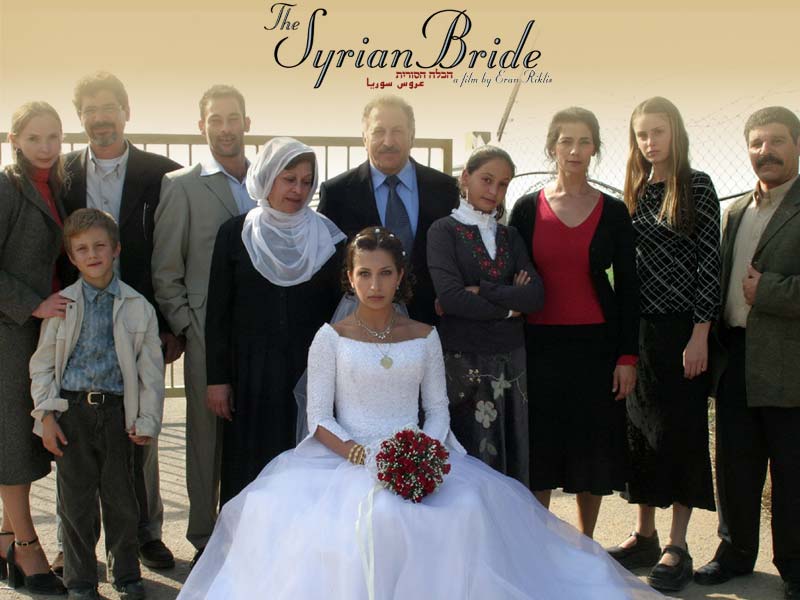
I recently saw the movie The Syrian Bride, an Israeli film with a largely Israeli-Arab cast and Arabic script. It is the story of a Syrian bride from Majdal Shams on the day of her wedding and the trials and tribulations she has to go through to cross the border into Syria to meet her bridegroom. I will not give any more of the plot but highly recommend this gem of a movie to anyone who has not yet seen it. And yes, I shed some tears... But of course, nothing compared to the torrents unleashed by my wife.
Friday, March 03, 2006
No Civil Society Without Safeguarding the Rights of Individuals
We have been led to believe that since Bashar's accession to power, the Syrian intelligence services have become Mukhabarat lite. However, Joe Pace, in his recent Syria Comment post makes the point that this less brutal behavior applies only to known opposition figures who are in the public spotlight and whose case is championed by local and foreign human rights groups.
This has led me to wonder about what is known about the number of political prisoners lingering in Syrian jails unrecognized and unaccounted for. I searched the websites of Amnesty International, Human Rights Watch and Syrian Committee for Human Rights and other Syrian rights organization with little success. The only information available are the names of the few who are released once in a while or the occasional names of people arrested but with no follow up about their outcome. You seem to only get a glimpse of the few who are freed, but how many are in? Is it in the hundreds? The thousands? When a few prisoners are released to great publicity about Bashar's benovelent reformist heart, it means nothing if these arbitrary harassments, detentions and imprisonments do not stop.
Apologists for the present regime want us to give Bashar a chance and do not bother themselves with such issues. They support a top down approach to change with emphasis on economic reform and reform aimed at rooting out corruption. That is fine but cannot come at the expense or to the exclusion of reform at the level of individual rights. Corruption, bribery and lack of accountability in the economic sector leads to the enrichment of the thieving ruling class and further impoverishment of the common citizen. However, corruption and lack of accountability in the judicial system leads to shattered lives from prolonged imprisonment, torture and sometimes death.
Respect of individual rights is not an idealistic abstraction that should wait its turn in the reform queue. It is the fundamental building block of a civil society. There is nothing like personal experience to drive the idea home. In the 1980s, as a young man minding my own business, I was picked up by the Mukhabarat in the departure lounge of Beirut airport. I spent the day in the dank basement of their headquarters at Ramlet el Baida along with about 20 other people seeing my future melt away in front of my eyes. Fortunately, an acquaintance who saw me being arrested alerted friends who in turn secured the proper Wasta to get me out. My release was just as arbitrary and capricious as my arrest. My fate did not depend on my innocence or guilt but on the chance occurrence that someone actually witnessed the event and had the proper "connections". This is how cheap and insignificant the life of an individual citizen is. I was extremely lucky but I know that there are many citizens now wasting away in prisons unrecognized and unaccounted for.
I want to know what their names are, what they are accused of and what their sentences are. To me their lives are as important as those of Anwar Bunni and Riad Seif.
Below are links to human Syrian human rights organizations:
Syrian Human Rights Committee
Damascus Center for Theoretical and Civil Rights Studies
Free Syria
Syria National Council
Syrian Women
Arab Organization for Human Rights-Syria
Subscribe to:
Posts (Atom)