Saturday, March 25, 2006

Syrian Opposition: Waiting for...What?


Call me impatient or call me a skeptic but its seems to me that all the internal and external Syrian opposition meetings and declarations are generating a lot of heat and very little light. How exactly is the opposition planning to change the regime?

There seems to be unanimous agreement among the opposition that foreign military intervention is not an option. Besides, the Americans, the only ones capable -and foolish enough- to entertain this possibility, have their hands full next door. No one wants to risk a violent internal change either as it might degenerate into civil strife.

The opposition seems to be confident that a combination of internal and external pressures will eventually topple the regime. Statements have been made over the past year that the regime is only months away from total collapse. That appears to be wishful thinking. By all indications that I can see, the regime appears to be unrepentant and largely unfazed. Instead of opening up the regime appears to be becoming more repressive. Instead of escalating pressure on Bashar and Co., the Americans and Europeans seem to have loosened the noose around his neck. Sure there is the periodic State Department scolding of the regime but nothing like the bluster of the first few months after the Hariri assassination. Bashar has delivered on the issue of border control and the Americans, especially after the Hamas win and the ongoing mess in Iraq, would now rather have stability than democracy. Moreover, in the name of Arab harmony and stability, the Egyptians and Saudis are working to defuse some of the international pressure on the Syrian regime. The expectation was that the results of the Hariri investigation would be the straw that would break the regime's back. However, a year after the crime and with the initial investigation bungled and tainted by the Lebanese authorities, the trail is cold. Neither Mehlis nor Brammertz have produced "smoking gun" evidence of complicity by the leadership of the Syrian regime (to paraphrase: absence of proof is by no means proof of innocence).

What about people power? Unless I missed something major, not much seems to be happening. There are the occasional small, timid anti-government demonstrations that are brutally nipped in the bud. The Syrian people are either too cowed by the regime or afraid of what they see happening in Iraq; or the majority are too politically disengaged to care. If there is a simmering population ready to explode, I don't see any evidence of it. Perhaps it is that most members of the opposition -with the exception of the Kurds- do not have large constituencies that can be readily mobilized into the street.

So coming back to my initial question: how do you change a regime non-violently if the regime will not "go gently into the night"? The answer is a bloodless coup, a palace coup, or to use a medical metaphor, a minimally invasive procedure. To achieve such a coup, you have to have friends on the inside. Enter Khaddam. This is perhaps why despite his unsavory past and unconvincing overnight conversion to the lofty ideals of freedom and democracy, the opposition is flocking to him. The man's got a plan; he talks of preparing to drop a "political bomb" and hints of having highly placed individuals in the Syrian armed forces ready to the bidding on his behalf.

Like many Syrians, I do not trust Khaddam but I really don't see anyone else capable of effecting the change that we are looking for. At the same time I fear what he will do the morning after.

(Photo: AK, Muir Woods, California)

Saturday, March 18, 2006

Fragments of Memory


Here are fragments of memories from my Syria formed in childhood. To me, these are important memories that decades of absence have failed to erase and make irrelevant. Despite living and adapting to other lands, Syria is the only place I feel a primordial connection to. This sense of belonging is perhaps subjective but paradoxically seems to grow with time -and age.

  • Getting separated, at age five, from my mother in Souk el Hamidieh and making my way back home while my parents and the police frantically searched for me...
  • Breathing the cool, crisp, early morning mountain air of Slenfeh...
  • The large sepia-toned portrait of my grandfather, whom I never met, hanging in a thick wooden frame in my grandmother's house...
  • Feeding ducks in Jnainat el Sabkeh (does it exist?) in Damascus...
  • The familiar comforting smell of my grandmother's house: a whiff of samneh from the last meal mixed with the smell of laurel-scented olive oil soap
  • My cousin demonstrating to us the flammable nature of farts (yes, it is true)...
  • Picnicking at the family's bustan and watching my father's uncle, a large man, singlehandedly finish off a whole basket full of oranges...
  • Taking in the scenery on a languid, hot summer day, while riding a Beirut-Lattakia taxi with Um Kulthoum playing on the radio... And watching in awe as we drove past Qalat el Hosn up on the hill...
  • Watching the snow fall over Damascus and having my mother point up to Jabal Kaisson and tell us that Madame Holle (a German fable) is shaking the feathers out of her pillow case...
  • Family picnics in Zabadani...
  • Looking up from the street to see our newborn youngest brother-the only Damascene among us- held up to the hospital room window by my mother...
  • Swimming at Shate' al Azrak...

These are some of my nostalgic memories of Syria. Memories distorted by the filter of time and distance but nonetheless real memories to me.

Filtered but not forgotten are the unpleasant memories; the hasty, forced departures and the fragmentation and dispersion of a vibrant extended family into the four corners of the world. This is a story that can be told by tens of thousands of Syrian families driven away by the stifling political oppression and lack of economic opportunities afforded by the inept, corrupt and dictatorial rule of the Baath regime for the past forty three years.

(Photo by AK: Winter, Western New York)

Saturday, March 04, 2006

Enough to Make a Grown Man Cry...


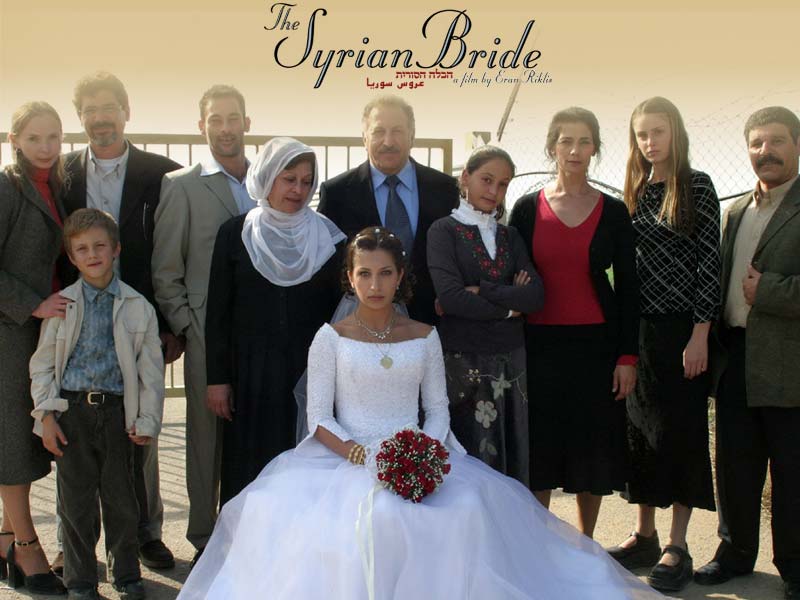
I recently saw the movie The Syrian Bride, an Israeli film with a largely Israeli-Arab cast and Arabic script. It is the story of a Syrian bride from Majdal Shams on the day of her wedding and the trials and tribulations she has to go through to cross the border into Syria to meet her bridegroom. I will not give any more of the plot but highly recommend this gem of a movie to anyone who has not yet seen it. And yes, I shed some tears... But of course, nothing compared to the torrents unleashed by my wife.

Friday, March 03, 2006

No Civil Society Without Safeguarding the Rights of Individuals

We have been led to believe that since Bashar's accession to power, the Syrian intelligence services have become Mukhabarat lite. However, Joe Pace, in his recent Syria Comment post makes the point that this less brutal behavior applies only to known opposition figures who are in the public spotlight and whose case is championed by local and foreign human rights groups.
This has led me to wonder about what is known about the number of political prisoners lingering in Syrian jails unrecognized and unaccounted for. I searched the websites of Amnesty International, Human Rights Watch and Syrian Committee for Human Rights and other Syrian rights organization with little success. The only information available are the names of the few who are released once in a while or the occasional names of people arrested but with no follow up about their outcome. You seem to only get a glimpse of the few who are freed, but how many are in? Is it in the hundreds? The thousands? When a few prisoners are released to great publicity about Bashar's benovelent reformist heart, it means nothing if these arbitrary harassments, detentions and imprisonments do not stop.

Apologists for the present regime want us to give Bashar a chance and do not bother themselves with such issues. They support a top down approach to change with emphasis on economic reform and reform aimed at rooting out corruption. That is fine but cannot come at the expense or to the exclusion of reform at the level of individual rights. Corruption, bribery and lack of accountability in the economic sector leads to the enrichment of the thieving ruling class and further impoverishment of the common citizen. However, corruption and lack of accountability in the judicial system leads to shattered lives from prolonged imprisonment, torture and sometimes death.

Respect of individual rights is not an idealistic abstraction that should wait its turn in the reform queue. It is the fundamental building block of a civil society. There is nothing like personal experience to drive the idea home. In the 1980s, as a young man minding my own business, I was picked up by the Mukhabarat in the departure lounge of Beirut airport. I spent the day in the dank basement of their headquarters at Ramlet el Baida along with about 20 other people seeing my future melt away in front of my eyes. Fortunately, an acquaintance who saw me being arrested alerted friends who in turn secured the proper Wasta to get me out. My release was just as arbitrary and capricious as my arrest. My fate did not depend on my innocence or guilt but on the chance occurrence that someone actually witnessed the event and had the proper "connections". This is how cheap and insignificant the life of an individual citizen is. I was extremely lucky but I know that there are many citizens now wasting away in prisons unrecognized and unaccounted for.

I want to know what their names are, what they are accused of and what their sentences are. To me their lives are as important as those of Anwar Bunni and Riad Seif.

Below are links to human Syrian human rights organizations:

Syrian Human Rights Committee
Damascus Center for Theoretical and Civil Rights Studies
Free Syria
Syria National Council
Syrian Women
Arab Organization for Human Rights-Syria

Monday, February 20, 2006

SyriaPol: Gazing into the Crystal Ball

I participated in the SyriaPol devised by George Ajjan today. It gives 16 different scenarios of what Syria's future might look like and asks Syrians to rank each according to how they feel about that particular future from ideal all the way to totally unacceptable. I am glad this poll is taking place but it is anybody's guess as to how representative the results will be. Internet access from within Syria is tightly controlled and those who do have access are likely to abstain. Completing the poll, I must say, was a discouraging and sobering experience. Only one scenario of the 16 proved marginally acceptable to me. Now I am assuming that the different scenarios given are based on extensive research, but in the end how things will materialize. Most of the scenarios included either a Sectarian government (a la Libanaise) or an Islamic government; neither works for me. The former has been tried and failed miserably next door. As for the latter, show me an enlightened Islamic state before I will start considering the possibility. I accept and respect the fact that Muslim values will be represented in the government of a country where conservative Muslims are in the majority so long as it is not at the expense of the rights of minorities and individual rights. The Syrian Muslim brotherhood, despite its demonization by the Assad government, has, at least on paper, accepted this formulation in agreements with secular opposition groups.

The last question on the survey asked, almost like an afterthought, was whether sustained violence is to be expected if the regime collapses suddenly. Who the hell knows? I don't. Trying to read the tea leaves in a country run by a government more opaque and secretive than the Bush administration is not easy. I don't think any of pundits know for sure; if they do, no one is saying. Syrian government papers predictably every few weeks report a battle with "terrorists" inside Syria. Whether these "terrorists" are real threats or props for the Syrian government's internal (see what awaits you if we fall) and external (we are your partners in the war on terror) propaganda is hard to say.

I am eager to see what the results of the poll show. Frankly though, I think a bassara looking into your coffee cup may do as well as George's poll.

(Photo by AK: Merced River, Yosemite National Park)

Wednesday, February 15, 2006

"Tel Pere, Tel Fils"

Like father, like son: My post yesterday was mostly tongue-in-cheek but deep down, there was a glimmer of hope tha Bashar was different. That glimmer was instantly extinguished today with the Syrian mukhabarat re-arresting Mamoun el-Homsi, a human rights activist and member of the Damascus Spring recently released from prison. What the hell is going on? Talk about sending mixed messages! How many chances do we give Bashar to get it right before concluding, like many have long since concluded, the he is no different and that this regime is incorrigible and beyond reform?

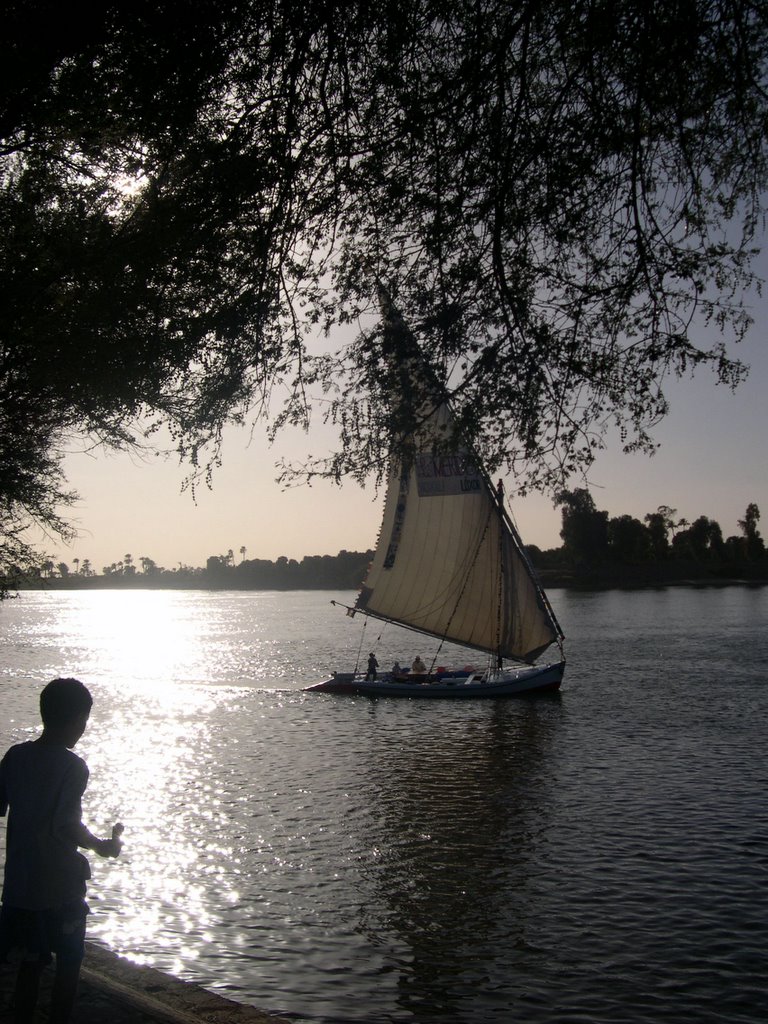
(Photo AK: Nile river at Luxor)

Monday, February 13, 2006

Dear Mr. President


I am writing in the hope that, as an online letter, it will reach you directly without the filter of the yes-men and self-serving sycophants that surround you and taint your view of the world. This letter via internet also celebrates your appointment of Amr Salem as minister -a good move- hoping that his appointment will bring greater openness and access to information to the Syrian people.

Dr. Bashar, these are trying times for you and the Syrian people. Despite all the blame and accusations aimed your way, I feel that -sometimes- you are trying to do the right thing. Some will say that I am naive. Perhaps it is the kinship I feel for a fellow physician as our conduct is guided by a professional oath that we both took. So in this spirit allow me to review some of the principle tenets of the Hippocratic Oath as a guide for these difficult times:

I will follow that treatment which according to my ability and judgment I consider for the benefit of my patients (People), and abstain from whatever is deleterious and mischievous. The current regime is like a cancer upon the Syrian people. Like all cancers it sequesters blood and nutrients for its own growth leaving the patient (people) weak and cachectic. Distracting the people (ex. Cartoons) from this state of affairs is akin to giving analgesics to a patient dying of cancer. Besides distraction provides only temporary relief. February 14th is upon us and the Lebanese -for good reason- are once again cursing you and by extension, all of us. If the tumor is not excised, Dr. Bashar, both the patient and the tumor will succumb. Drastic surgery is needed, and time is running short. You can start by ridding yourself of Rustom Ghazaleh, no one will shed a tear for this thug.

In the presence of epidemics or other danger I will not allow fear of personal harm to turn me from my duty. It is true that in this time of danger, you have stood your ground, but I am not sure what you have stood FOR. The way forward is clear. Come clean on the Hariri affair and punish those responsible then you can move forward with your promised reforms.

Into whatever house I enter, it shall be for the benefit of the sick to the utmost of my power, holding myself aloof from any act of corruption. This is where, as president, you have to break from the Hippocratic Oath. You cannot hold yourself aloof from any act of corruption especially when it is practiced by the very people you depend on to execute your authority. If you do, you become complicit in these acts of corruption. Khaddam did not suddenly become corrupt when he moved to Paris, you have held yourself aloof his and many others' acts of corruption. The result is a kleptocracy with an impoverished and disenfranchised people.

So Dr. Bashar, you have to do right thing. The Syrian people, you seem to suggest, have to choose between the status quo of a sclerosed and corrupt system and chaos. These are not real choices as the status quo is unsustainable and will lead to chaos. The Syrian people are ready for positive change, big, bold changes, not timid cosmetic changes. Do it not because George W and Condaleeza are turning up the heat on you, but because it is the right thing to do. Do it now and take ownership of your decisions and you will gain the respect and admiration of your own people. Do it piecemeal and grudgingly and it looks like capitulation to the self-serving policies of the American administration. The defiant public posturing does no fool anybody. Waiting in the wings are Syrian dissidents, courageous men who have dared to speak truth to power regardless of the consequences. Most of these honorable men and loyal citizens, despite their mistreatment, have expressed a willingness to transform from within rather than destroy and rebuild. Take them up on their offer before it is too late.

(Photo by AK: Nile at Luxor)

Monday, February 06, 2006

Of Cartoons and Looney Toons


Let me add my voice to the chorus of disgusted Syrian bloggers at the recent inexcusable behavior of our compatriots.

I don't, for second, believe that the riots in Damascus were spontaneous. You all know that nothing of the sort is allowed to happen in Syria without the complicity of the security services. I guess it is Bashar's way of letting off some steam at someone else's expense-its an old, time-honored Baathist trick.

Be that as it may, I am still appalled by the behavior of many of my co-religionists in their response to this affair. Yes, the cartoons of the Prophet were disrespectful, offensive and hateful. And yes, there is a double standard in the West. An equally offensive cartoon directed against Jews or other ethnic or religious minorities would have elicited howls of protest. However, it is just a CARTOON by a bigoted cartoonist published in a newspaper, in tiny Denmark, that is incapable of distinguishing between free speech and hateful speech. These cartoons will not affect the life of Muslims in Damascus, Tehran or Kabul. Muslim in these cities have other more pressing social, political and economic problems that they need to deal with; homegrown problems. No one will lose life or limb or property because of what the cartoons depict. This is a local Danish problem; it is the Muslims in Denmark who need to fight, with the power of the pen, to dispel the stereotypes and show the newspaper the error of it ways. These cartoons do not deserve this worldwide attention and misdirected outrage. They certainly do not deserve the violence we have seen in the last several days.

These events belie a continuing and alarming downward spiral of worsening East-West polarization fed a by a steady diet of propaganda from the two extremes (the Looney Toon fringe). I will address the Looney Toon fringe of the West some other time; my venom tonight, in the light of the recent events, is reserved for our own fanatics:


These are the people who exploit the masses by casting all Muslims as victims... Who can make grandiose plans for wreaking havoc and destruction all over the world but have not a single constructive plan to improve the lives of other Muslims... Who have no qualms about killing other Muslims if they get in their way... Who declare you a Kafir when it suits them... Who want to impose their view of Islam on everyone... and turn all Muslims into identical, unthinking, automatons...Who want to take us back a thousand years yet forget that Muslims were successful then because they were tolerant and enlightened...Who desecrate with their actions and words everything that is noble and pure about Islam.

These are the people who make me angry and make me ashamed.

(Photo by AK: Arenal volcano, Costa Rica)

Sunday, January 29, 2006

What Tolerance Begets....


The Ornament of the World: How Muslims, Jews and Christians Created a Culture of Tolerance in Medieval Spain (by Maria Rosa Menocal) . This is an excellent book on al-Andalus. It is an engaging and very interesting book which covers the subject in a clear-eyed and objective way. For the Arab and Muslim bashers in the West, who speak of their exclusive "Judeo-Christian" heritage, it becomes clear that they ought to add Muslim to this equation. On the other hand, Muslim extremists, in their regressive and monochromatic view of the world, look at al-Andalus only as pure conquest and minimize the contributions of other cultures and ethnic groups within the Muslim empire. To me, the genius of Islam is its ability, in its inclusiveness, to absorb knowledge from other cultures, engage the various peoples under its wing and create a superior and advanced culture that then Europe used to lift itself out of the dark ages.

Monday, January 23, 2006

Syrians & Lebanese: Two Sides of the Same Coin


Having grown up Syrian in Lebanon, I have heard it all. To the Lebanese, we were like distant, unsophisticated, country cousins that they would rather not been seen with. They were clever, urbane, worldly, cosmopolitan Levantines and we were simple minded, backwards and spoke with a funny accent. Mind you, this was the impression before the Syrian army and mukhabarat spent almost 30 years there! So I was not terribly surprised when the March 14th demonstrations turned xenophobic and then ugly.

The outrage at the Hariri assassination and the oppressive presence of the mukhabarat were understandable, the xenophobia was not. Both people originate from a common stock. Besides, who better understands Lebanese outrage than people who have endured the suffocating oppression of baathist rule than the average Syrian.

I applaud the Lebanese for demanding their independence and trying to hold the Syrian government accountable. However, there is something very unpalatable about the way they have made Syria culpable for 30 years of their own sordid civil dysfunction. It is all too convenient and, unfortunately, all too Lebanese. Even when they were killing each other, it is always someone else's fault. If it is not the Palestinians, it is the Israelis, the Americans or the ____ (fill in the blank). More than 15 years after the end of the Lebanese civil war, there has not been any serious discussion of the roots of the civil war, no reconciliation, not a single public memorial. The recent discovery of the mass grave in Anjar next to a former Syrian mukhabarat offices was first met with macabre glee in some Lebanese circles. Here is finally hard proof of Syria's dastardly work. But very quickly, the story disappeared from the front pages lest mass graves, of Lebanese making, start popping up a little everywhere. This collective amnesia, may be a reflexive survival instinct, but does not bode well for the long term health of the country.

Don't get me wrong, I care deeply about Lebanon (how can I not? My wife is Lebanese). Some of the Lebanese's conceit about their superiority to the Syrians is true. Beyond the superficial obsessions with everything new and Western, the Lebanese society is more developed in many ways than Syrian society. The free press and free exchange of ideas has fostered an atmosphere that has helped the Lebanese establish civic institutions independent of the absent/dysfunctional state. Moreover, the young, post-civil war generation of Lebanese seem to have shed some their parents' sectarian biases. Syrian society, on the other hand, has languished in cultural and economic isolation and stifling enforced Baathist conformity. Syrians, on the other hand, have a much clearer sense of national identity, something that -despite all the recent flag waving- the Lebanese still sorely lack.

The Lebanese and Syrians are inextricably linked by geography, history, clan and sectarian relationships. Yet over the past 50 years, each has evolved separately, forming a distinctive identity and historical narrative (no Greater Syria for me). Both countries' interests will easily converge when each has a stable, truly representative government. For the Lebanese, the Syrian exit is a start, but along with a full accounting of Syria's misdeeds is a need for a full accounting of their own culpability - what is needed is a Lebanese "Truth and Reconciliation Commission". For the Syrians, the journey starts with the radical reform or the ouster of the current regime. Along the way, both countries will need each other, not in a the master-vassal relationship but as equals with a common destiny.

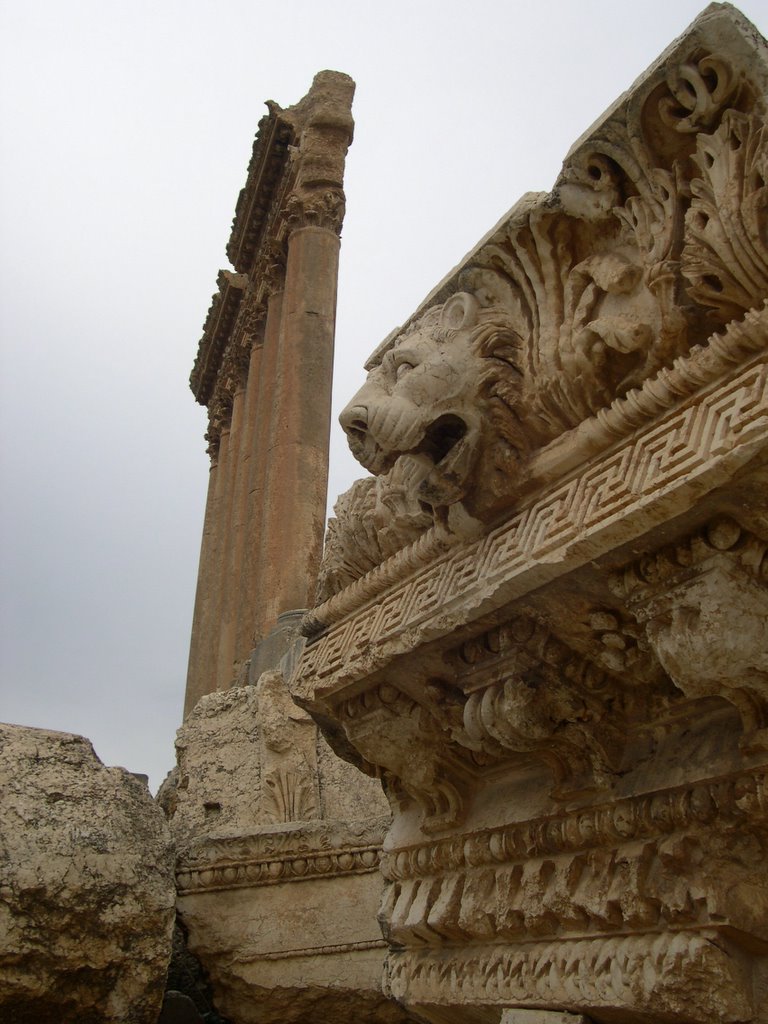
(Photo by AK: Baalbeck, Lebanon)

Tuesday, January 17, 2006

Syrians on Edge

Revealing comments on public sentiment inside Syria by Abdallah Ta'i (in Arabic) on Syria Comment.

Saturday, January 14, 2006

The Problem of Identity


Identity or rather the multiplicity of identities, in my view, remains a fundamental problem in the Middle East. Most of us have hyphenated identities: Lebanese-Maronite-Christian, Syrian-Kurd, Egyptian-Copt and so on. How we express our hyphenated identities depends on who we are talking to and what the particular social situation is. So religious, sectarian or clan/ethnic affiliations may become the foremost identifier superseding national identity. It is these unresolved issues that have led to such paradoxes as: A secular, socialist party (Baath) dominated by a religious minority, the statue of Salahudin proudly displayed in Damascus but hundreds of thousands of Syrian kurds are deprived of citizenship, Lebanese shiites with dueling loyalties to Iran and Lebanon to name but a few. The cause of these dueling identities are multiple including the artificial borders of modern Arab states and the real and perceived marginalization of ethnic and religious minority groups.

The concept of Arab nationalism grew during the Arab Nahda in the late 19th century fueled by Arab intellectuals returning from Europe in the waning years of the Ottoman Empire. This movement was aided by the antipathy many people felt for Ottoman rule. What is unclear (at least to me) is whether this movement awakened a dormant sense of Arab identity or whether it was a foreign construct imposed from above. How, for example, did the average Damascene merchant view their counterpart in Beirut or Jerusalem? Regardless, the concept stuck through the early most of the 20th century as the Middle East was arbitrarily divided up by colonial powers. Promoting Arab nationalism remained the public stance of all Arab leaders but their self-preservation was their real stance. While they preached unity, they effectively segregated us from each other. It was easier for an Westerner to visit an Arab country than for an Arab to visit a neighboring Arab state. Arab nationalism failed because individual Arabs states failed.

So is the concept of Arabism dead? I don't think so. The concept of an Arab nation does ring true for many people on a number of levels. While the Palestinian plight was often cynically used by Arab leaders to promote their particular agendas, popular support for the Palestinians was genuine. There are also the bonds of language, religion and a shared history. Ironically, these popular bonds may be getting stronger at a time when political commentators have declared the death of Arab nationalism. Over the past two decades large numbers of people have migrated from poorer to richer Arab countries for work mixing of previously segregated and diverse Arab cultures. The other factor is the proliferation of satellite TV. Now sitting in Beirut, you can watch a vast array of channels from across the Arab world. There are call in shows, from the trivial to the serious, receiving calls from a dozen different countries. There is clearly an affinity and commonality that is being expressed among the people across the Arab world as never before. So although the political concept of Arabism and Arab identity may be dead, it is being been replaced with a genuine, grassroots Arab identity. To be sure, this does not mean that borders will melt away. After close to three generations of independence, most Arab states, however artificially drawn by the colonial powers, have now distinct identities with a historical narrative of more than half a century that is particular to each. So no matter how close Syrians are to Lebanese, each identify with a different historical and political memory. To be successful, this Arab identity has to be expansive and inclusive so that it can accommodate the vast diversity within our midst while respecting the uniqueness and independence of individual states.

(Photo by AK: San Francisco)

Who am I to Blog?


I thought long and hard about creating this blog. However, our part of the world is at a pivotal time in its modern history and I felt helpless watching from afar. Expressing my opinions freely is my way, however humbly, to contribute towards the advancement of positive change. What energized me is the discovery of a wonderful parallel world of Syrian and Lebanese bloggers working from within and without, expressing original ideas freely, unhindered by the straight-jacket of cultural and political dogma. What surprised me most were the Syrian bloggers, from courageous known dissidents to anonymous citizen bloggers vividly demonstrating that 40 years of Baathist oppression may have impoverished the people materially but did not dampen their spirit.

I strive to be a citizen blogger looking from a distance. I left Syria at a young age and grew up in Lebanon, and now reside in United States. Before some dismiss me as an outsider with no first hand knowledge of current day Syria, I will shamelessly wave my family credentials. My grandfather was a delegate to the first Syrian Congress in 1920 and advocated to give women the right to vote. My father also served in pre-Baathist Syrian governments only to be rewarded with 3 months in Mazzeh prison during the Baathist era following which he left Syria. None of this gives me any special expertise or knowledge but it does establish my personal and family connections and my interest in the fate of my place of birth. I want to see an end to the oppressive and failed Baathist regime. I want to see the evolution of a representative and responsive government that will allow for the full expression of the cultural and economic potential of the Syrian people. In the end, I want to be able to go back to my hometown, without hindrance or fear, to see my grandfather's old house in which my father delivered me some 47 years ago.